
Startup Compliance: A 5-Minute Guide for New Founders
Jatin Detwani
2025-12-10
Here’s a fun analogy: Managing a startup is similar to building and flying an aeroplane. One element that founders frequently ignore in the rush to develop game-changing solutions and scale quickly is compliance. It's the foundation that keeps your startup flying safely, even though it may not be as glamorous as pitching to investors or introducing new products.
Consider compliance to be the seatbelt for your startup. You can choose to ignore it, but you'll regret it when the turbulence strikes, which it will. Let's simplify it into a brief, simple guide that will guarantee your startup is safe wherever you do business.
Why Compliance Matters for Startups
Let's address the "why" before moving on to the "how." Compliance is about trust, not just about avoiding fines or penalties. regulators' trust, investors' trust, and consumers' trust. A well-organised compliance framework lets people know you're a long-term company, not just a one-off.
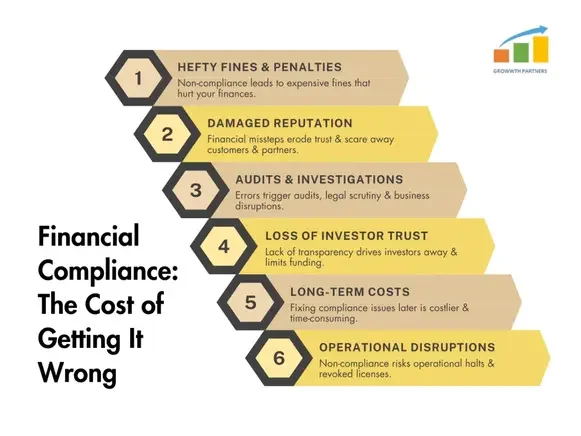
Serious repercussions may result from noncompliance:
Penalties and fines: Heavy fines for noncompliance can deplete your runway.
Reputational damage: You risk losing the trust of your partners and customers with just one mistake.
Operational disruptions: Business interruptions brought on by non-compliance frequently impede growth.
What does thorough compliance mean for new businesses, then? Let's make it simpler.
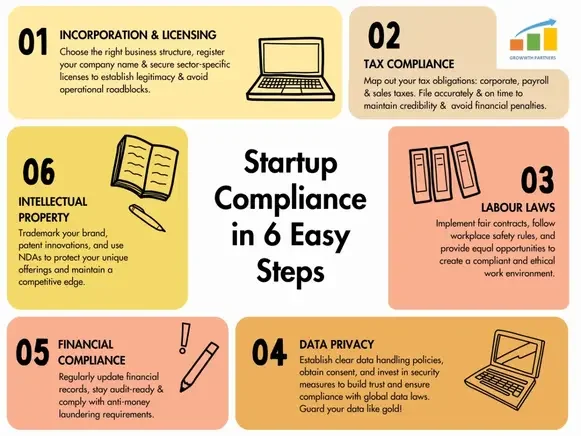
Step 1: Establishing a Solid Basis through Incorporation and Licensing
Proper incorporation is the first step in any startup's compliance journey. Select an LLC, corporation, partnership, or sole proprietorship based on the legal structure that best suits your objectives. Everything is affected by this decision, including liability and taxes.
Checklist for inclusion:
Register your domain and business name.
Apply for the licenses and permits your business needs.
Verify adherence to industry-specific laws (for example, fintech startups might need extra licenses).
Pro tip: Although many founders skip this step, taking the time to do it now will save you a tonne of trouble later.
Step 2: Staying Compliant with Taxes
Although they are unavoidable, taxes can be a startup's worst enemy. It's crucial to comprehend the tax requirements in the areas where you conduct business.
Important things to concentrate on:
Corporate taxes: Be aware of your tax rates and filing dates.
Employee taxes: Make sure payroll taxes are correctly withheld and filed if you are hiring.
Sales taxes, if they apply: You may be required to collect and remit sales taxes if you sell goods or services.
Were you aware? When expanding internationally, startups frequently underestimate how difficult it is to comply with international tax laws. Consult an expert to avoid falling into that trap.
Step 3: Respecting Your Team Under Labour Laws
Your most valuable resource is your workforce, and maintaining their satisfaction is crucial for compliance as well as culture. Although labour laws differ greatly between nations, the following universal principles apply:
Employment agreements: Create precise, legally sound contracts that specify responsibilities, pay, and benefits.
Whether working in person or remotely, make sure that the workplace is safe.
Equal opportunity: Steer clear of discrimination in daily operations or hiring.
A quick hint: Providing options for stocks is an excellent strategy to attract and retain talent, but you must ensure compliance with employee equity regulations. If you are planning ESOPs or share-based compensation, consider getting expert guidance from a specialised ESOP advisory team to avoid tax complications and regulatory issues for both founders and employees.
Step 4: Upholding Privacy of Data
Data is precious in a world where everything is digital. Serious legal issues and a decline in trust can result from improper handling of employee or customer data. The standard for data privacy has been raised by laws such as the CCPA and GDPR.
How to maintain compliance:
Clearly state your policies for gathering and storing data.
Obtain express consent before collecting data.
Protect your digital infrastructure from intrusions.
Remember: A well-written privacy policy on your website is a tool for fostering trust, not just a tick to tick.
Step 5: Keeping Your Finances Transparent
Startups frequently manage several funding sources, including grants, venture capital, angel investments, and bootstrapping. Maintaining accurate and transparent financial records is essential for compliance and investor trust. If you’re unsure how to choose the right accounting partner, you can read our guide on how startups can choose the right accounting service provider in Singapore, which explains what to look for in financial support as you scale.
Here's how:
Accounting: Keep current and accurate financial records.
Audit readiness: Always be ready for regulatory or investor audits.
Anti-money laundering (AML): To prevent fines, make sure that AML rules are followed, if applicable.
Step 6: Protecting Your Ideas with Intellectual Property
Whether it's a brand name, patented technology, or a unique app, your startup's intellectual property is its lifeblood. Its protection ought to come first.
Steps that can be taken:
Put your slogans, logo, and brand name under a trademark.
Patent original ideas or methods.
When disclosing private information to contractors or partners, use NDAs.
The golden rule: IP protection is a worldwide issue. Make sure your intellectual property rights are recognised globally if you intend to grow.
Typical Compliance Errors and How to Prevent Them
Let's face it, maintaining compliance is a difficult and continuous process. Startups frequently make the following mistakes:
Using manual procedures: Compliance is meticulous. Reduce human error wherever possible by automating.
Disregarding international laws: Although expanding internationally is exciting, there are additional compliance requirements.
Postponing adherence: Growth is frequently given precedence over compliance in early-stage startups. This strategy backfires as you grow.
The Takeaway: Compliance is a Continuous Process
Compliance is a continuous process. What worked in year one might not work in year three as regulations change and your startup expands. Review and update your compliance procedures on a regular basis.
Startups position themselves for long-term success when they prioritise compliance rather than treating it as an afterthought. And even though it might not be the most thrilling aspect of your journey, compliance is unquestionably one of the most crucial.
How Growwth Partners Can Help
Compliance doesn't have to be difficult to navigate. From handling payroll and taxes to expediting financial reporting, Growwth Partners provides customised financial services that make your compliance journey easier.
Our solutions are made to minimise risks, save time, and guarantee that you're always abiding by the law. Let us take care of the details so you can concentrate on expanding your company.
Are you prepared to secure your startup’s future? Growwth Partners is here to simplify your compliance journey and support your financial growth. Schedule a call with our team to get personalised guidance and a free consultation.
Frequently Asked Questions
Common questions about this topic
Related Services & Solutions
Accounting Services in Singapore
Leverage our generative AI development services to streamline workflows, boost productivity and drive innovation, while ensuring seamless integration with your existing systems.
Part-Time CFO Services
Optimize your business potential with our comprehensive generative AI consulting services, designed to guide you in leveraging GenAI for operational excellence and product innovation.
Bookkeeping Services in Singapore
Unlock AI's full potential for your business through our comprehensive AI development services, designed to tackle intricate tech challenges, streamline business workflows, and achieve operational excellence.
Ready to Strengthen Your Financial Strategy?
Book a free consultation to discuss your business goals.
